
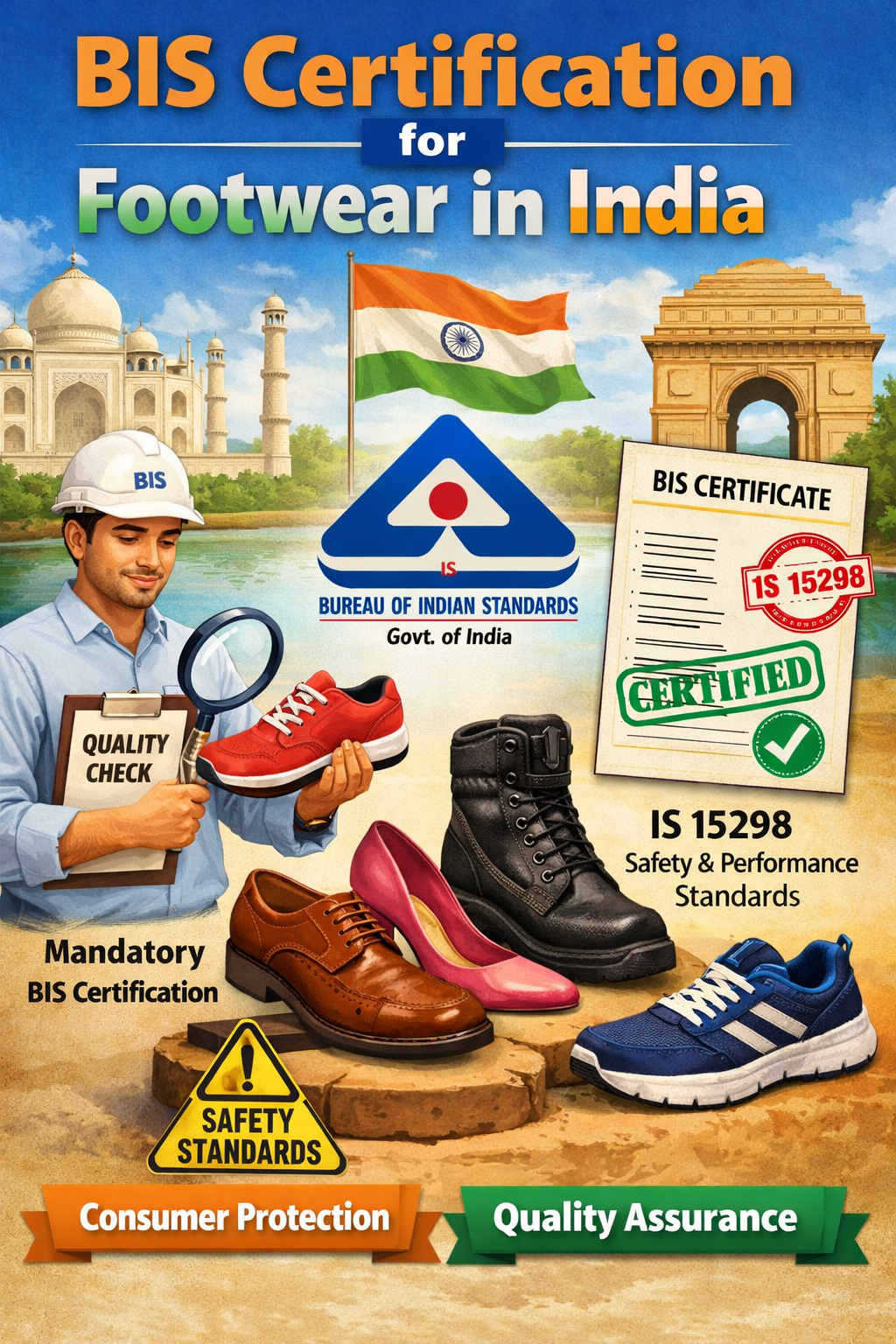
BIS Certification for Footwear in India
BIS Certification for Footwear is a mandatory compliance requirement in India to ensure that footwear products meet the prescribed quality, safety, and performance standards. The Bureau of Indian Standards (BIS), under the Government of India, regulates the manufacturing and sale of footwear to protect consumers from substandard products and to promote quality manufacturing practices.
Whether you are a manufacturer, importer, or brand owner dealing in footwear such as shoes, sandals, slippers, or safety footwear, BIS certification is essential before launching your products in the Indian market.
What is BIS Certification for Footwear?
BIS certification for footwear is issued under the ISI Mark Scheme, which confirms that the footwear complies with relevant Indian Standards (IS). Products covered under this scheme must undergo factory inspection, product testing, and quality control evaluation before receiving the ISI mark license.
The BIS certification ensures:
Durability and strength of footwear
Safety and comfort for consumers
Compliance with Indian quality standards
Legal authorization to sell footwear in India
Selling non-certified footwear for products notified under mandatory certification can lead to penalties, product seizure, or legal action.
Types of Footwear Covered Under BIS Certification
BIS has made certification mandatory for several categories of footwear, including:
Leather safety footwear
Rubber and PVC footwear
Canvas shoes
Industrial and protective footwear
All-rubber and all-polymeric footwear
Footwear for general purpose and occupational use
Each category falls under specific Indian Standards such as IS 15298, IS 1989, IS 5676, and others depending on the product type and usage.
Who Needs BIS Certification for Footwear?
BIS certification is required for:
Manufacturers in India producing footwear
Foreign manufacturers exporting footwear to India
Importers and brand owners selling footwear in the Indian market
OEM manufacturers producing footwear for other brands
Foreign manufacturers must appoint an Authorized Indian Representative (AIR) to handle BIS compliance in India.
Indian Standards Applicable to Footwear
Some commonly applicable Indian Standards include:
IS 15298 (Safety Footwear)
IS 1989 (Leather Safety Footwear)
IS 5676 (Canvas Shoes)
IS 12254 (Rubber Footwear)
The applicable standard depends on the design, material, and intended use of the footwear.
BIS Certification Process for Footwear
The BIS certification process for footwear involves multiple steps and must be handled carefully to avoid delays:
Step 1: Product Identification
Determine the applicable Indian Standard and certification scheme based on footwear type.
Step 2: Application Submission
Submit the BIS application along with required documents such as factory details, manufacturing process flow, and quality control measures.
Step 3: Product Testing
Samples are tested in a BIS-recognized laboratory to verify compliance with Indian Standards.
Step 4: Factory Inspection
BIS officials conduct a factory inspection to assess production capability, quality control systems, and testing facilities.
Step 5: Grant of License
Upon successful testing and inspection, BIS grants the ISI license, allowing the manufacturer to use the ISI mark on footwear.
Documents Required for BIS Footwear Certification
Business registration certificate
Factory layout and manufacturing flow chart
List of machinery and testing equipment
Quality control manual
Test reports from BIS-approved laboratory
Authorization letter (for foreign manufacturers)
Accurate documentation is critical to ensure smooth approval.
Timeframe and Validity
Processing Time: 3 to 6 months (may vary)
License Validity: 1 to 2 years
Renewal: Required before expiry with compliance verification
Early planning helps avoid market entry delays.
Benefits of BIS Certification for Footwear
Legal compliance in the Indian market
Enhanced brand credibility and consumer trust
Improved product quality and safety assurance
Competitive advantage over non-certified products
Reduced risk of penalties and product recalls
Certified footwear products are more trusted by retailers and institutional buyers.
BIS Certification for Imported Footwear
Imported footwear must comply with the same BIS standards as domestically manufactured products. Without BIS certification, customs authorities may reject shipments at Indian ports. Foreign manufacturers must apply under the Foreign Manufacturers Certification Scheme (FMCS) and maintain ongoing compliance.
Why Choose a BIS Consultant for Footwear Certification?
The BIS certification process can be complex due to technical standards, inspections, and documentation requirements. A professional BIS consultant helps by:
Identifying correct standards
Managing documentation and application
Coordinating laboratory testing
Assisting during factory inspections
Ensuring faster approval with minimal errors
Expert guidance saves time, cost, and compliance risks.
Conclusion
BIS Certification for Footwear is a mandatory and critical requirement for selling quality footwear in India. It ensures that products meet safety, durability, and performance standards prescribed by BIS. Whether you are a manufacturer or importer, obtaining BIS certification not only fulfills legal obligations but also strengthens your brand reputation and market presence.
If you are planning to manufacture or import footwear in India, timely BIS certification with expert support will help you achieve smooth market entry and long-term compliance success.
Representative Client's