
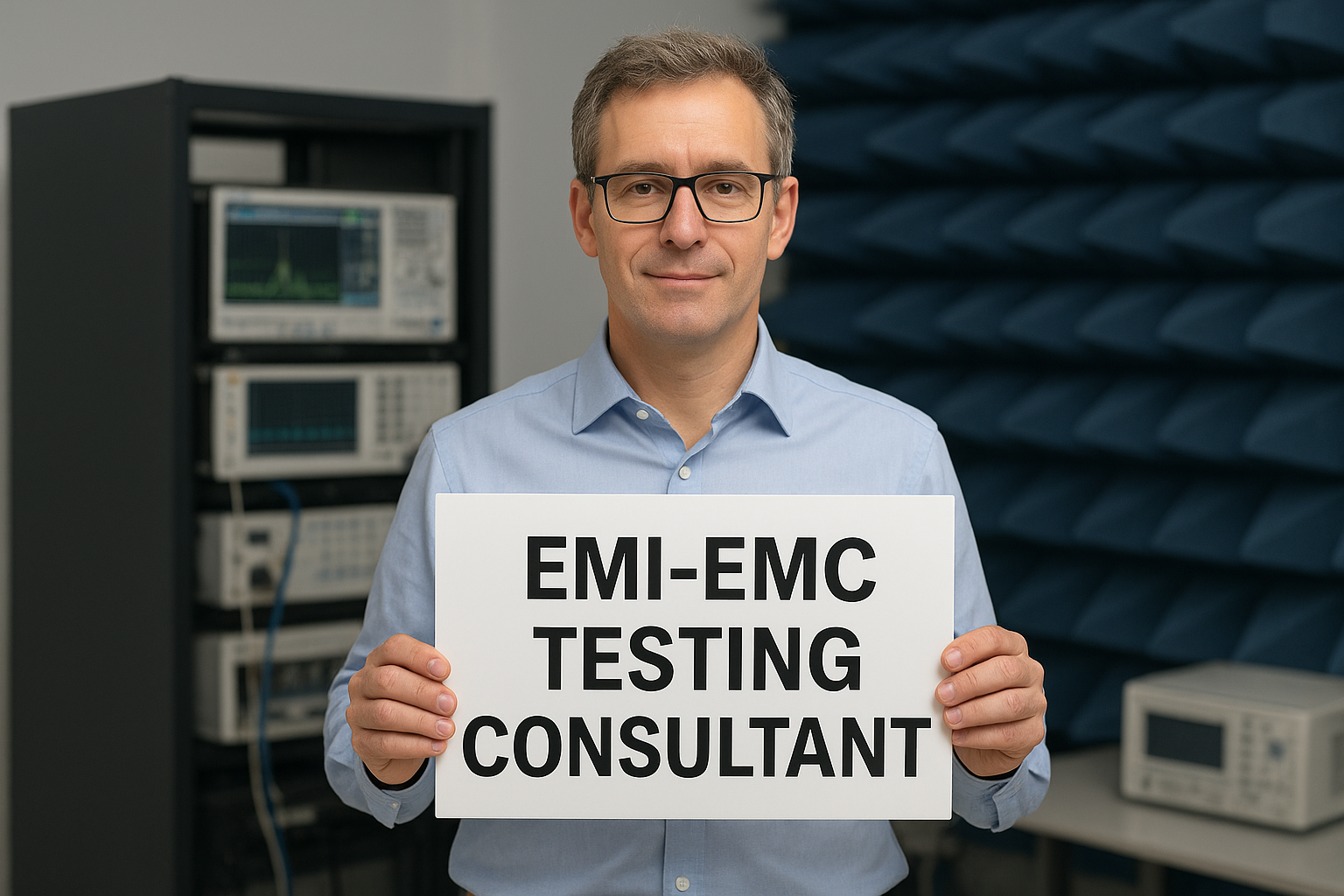
EMI-EMC Testing Consultant
In today’s highly electronic world, every device—from smartphones and LED TVs to industrial machinery and medical equipment—must operate without causing or receiving unwanted electromagnetic interference. To ensure this, global regulatory bodies mandate EMI-EMC testing as a compulsory requirement before products enter the market. This is where an experienced EMI-EMC Testing Consultant and a certified EMI-EMC Testing Lab become essential partners for manufacturers.
What Is EMI-EMC Testing?
EMI (Electromagnetic Interference) refers to unwanted disturbance generated by an electronic device that affects the performance of another device.
EMC (Electromagnetic Compatibility) ensures that a product functions correctly in its electromagnetic environment without introducing harmful interference.
EMI-EMC testing evaluates how well a product limits its electromagnetic emissions and how resistant it is to external disturbances. These tests are mandatory for several certifications, including:
BIS Certification (India)
CE Marking (Europe)
FCC Certification (USA)
IEC/ISO Standards Compliance
Automotive, Aerospace, and Medical Regulations
Because the testing process is highly technical and requires advanced setups, companies rely on specialised consultants and accredited labs.
Role of an EMI-EMC Testing Consultant
An EMI-EMC Testing Consultant is an expert who guides manufacturers through the complete compliance process required to meet global electromagnetic standards. Their role includes:
1. Pre-Compliance Assessment
Consultants identify potential EMI issues at the early design stage. This helps manufacturers avoid costly redesigns and reduces time-to-market. They review:
PCB layout
Circuit design
Wiring harness
Shielding and grounding
Power supply noise
2. Selection of Standards
Different products require different EMC standards. An EMI-EMC consultant determines the correct standards from:
CISPR
IEC
ISO
EN
MIL-STD
Automotive OEM Standards
Selecting the right standard is crucial to ensure market acceptance.
3. Product Documentation & Testing Plan
Consultants prepare:
Test plans
Technical files
Risk assessments
Compliance documents
User manual requirements
This documentation is mandatory during certification audits.
4. Support for Accredited EMI-EMC Testing Labs
A consultant coordinates your product testing with accredited labs. This includes:
Booking test slots
Preparing product samples
Monitoring test sessions
Resolving failures
Ensuring accurate reporting
5. Troubleshooting & Failure Analysis
If a product fails EMI-EMC tests, the consultant identifies the root cause and suggests corrective actions such as:
Adding filters
Changing shielding
Modifying layout
Reducing noise sources
Improving grounding
Their guidance helps achieve compliance faster and more cost-effectively.
6. Certification Support
Consultants handle the end-to-end submission and approval for certifications like BIS, CE, FCC, or OEM compliance so that your product can enter the market smoothly.
What Is an EMI-EMC Testing Lab?
An EMI-EMC Testing Lab is a specialised laboratory equipped with advanced instruments and environments to measure electromagnetic emissions and immunity. These labs follow international accreditation standards like ISO/IEC 17025 to ensure high accuracy.
Key Facilities of EMI-EMC Testing Labs
Anechoic Chamber (3m or 10m)
Shielded Rooms
Conducted Emission Test Setup
Radiated Emission Test Setup
Electrostatic Discharge (ESD) Simulator
RF Immunity Test System
Surge, EFT, Dips & Interruptions Test Setup
Harmonics & Flicker Measurement System
Such facilities allow precise evaluation of product behaviour under various electromagnetic conditions.
Types of EMI-EMC Tests Conducted in Labs
EMI-EMC labs perform multiple tests based on product category and regulatory requirements:
1. Radiated Emissions
Measures the electromagnetic waves emitted from a device over the air.
2. Conducted Emissions
Evaluates noise signals transmitted via power lines or cables.
3. ESD (Electrostatic Discharge) Testing
Checks the device’s resistance to sudden electrostatic shocks.
4. Radiated Immunity
Tests the ability of a product to function properly even when exposed to external radio frequencies.
5. Conducted Immunity
Measures product performance against conducted disturbances on power lines.
6. EFT (Electrical Fast Transient) Test
Checks stability under fast, burst-like electrical surges.
7. Surge Test
Simulates lightning strikes or power grid surges.
8. Harmonics & Flicker
Ensures compliance with power quality standards.
These tests guarantee that products are safe, reliable, and compatible with other electronic devices.
Why Hire an EMI-EMC Testing Consultant?
For manufacturers, achieving EMI-EMC compliance without expert support can be challenging. A consultant ensures:
Reduced product development time
Avoidance of costly redesigns
Faster certification
Accurate selection of standards
Proper planning of pre-compliance tests
Smooth navigation of regulatory requirements
They work closely with certified EMI-EMC labs, ensuring your product meets all necessary national and international benchmarks.
Benefits of Choosing a Certified EMI-EMC Testing Lab
Working with an accredited lab offers several advantages:
Comprehensive test coverage
High accuracy and traceability
Standardised procedures
Faster turnaround time
Valid test reports for global markets
Support for CE, FCC, and BIS approvals
A certified lab ensures your product is tested with the highest reliability.
Conclusion
EMI-EMC testing is a critical requirement for any electronic product entering global markets. Partnering with an experienced EMI-EMC Testing Consultant and a certified EMI-EMC Testing Lab ensures your product is safe, compliant, and ready for commercial success. Through expert guidance, advanced testing facilities, and efficient regulatory support, manufacturers can reduce failures, save time, and achieve faster market approvals.
Representative Client's