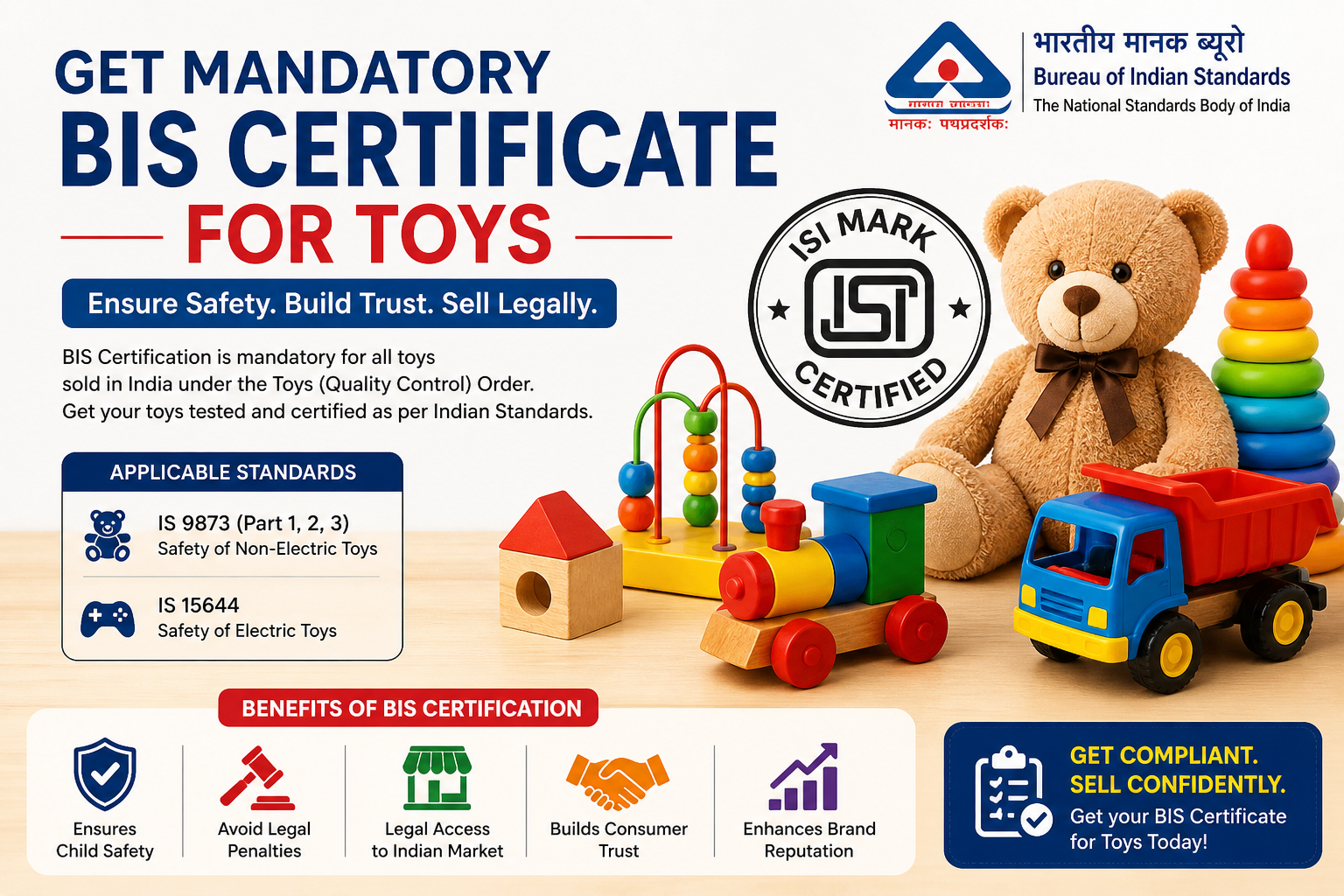
Getting a mandatory BIS certificate for toys in India is essential for manufacturers, importers, and sellers to legally market their products. The Bureau of Indian Standards (BIS) has made it compulsory for all toys—whether domestic or imported—to comply with strict safety and quality standards. This regulation ensures that toys sold in India are safe for children and meet defined performance criteria.
Why BIS Certification for Toys is Mandatory
The Indian government, through the Ministry of Commerce and Industry, enforced the Toys (Quality Control) Order, making BIS certification compulsory. Under this order, toys must conform to Indian standards such as IS 9873 (for non-electric toys) and IS 15644 (for electric toys). Without certification, selling toys in the Indian market is illegal and may lead to penalties, product seizures, or business closure.
This initiative is aligned with the government’s focus on consumer safety and the “Make in India” campaign, encouraging high-quality domestic manufacturing while restricting substandard imports.
Types of Toys Covered Under BIS Certification
BIS certification applies to a wide range of toys, including:
Non-electric toys (plastic toys, soft toys, wooden toys)
Electric toys (battery-operated toys, electronic games)
Educational and construction toys
Outdoor play equipment for children
Both Indian manufacturers and foreign exporters must obtain BIS certification before selling toys in India.
BIS Certification Scheme for Toys
Toys are certified under the ISI Mark Scheme (Scheme-I). Manufacturers must obtain a license from BIS and affix the ISI mark on their products. This mark signifies compliance with Indian safety standards and builds trust among consumers.
Foreign manufacturers must apply under the Foreign Manufacturers Certification Scheme (FMCS), which also requires adherence to the same standards.
Step-by-Step Process to Get a BIS Certificate for Toys
Product Testing: The first step involves testing the toy samples in a BIS-recognised laboratory. The product must meet all safety, mechanical, chemical, and flammability requirements.
Documentation Preparation
Applicants must submit the required documents, such as
Application Submission
The application is submitted to BIS along with the necessary documents and fees.
Factory Inspection
BIS officials may conduct a factory inspection to verify manufacturing capabilities and quality control systems.
Grant of License
After successful verification and testing, BIS grants the ISI license, allowing the manufacturer to use the ISI mark.
Ongoing Compliance
Regular surveillance and testing ensure continued compliance with BIS standards.
Key Requirements for Compliance
To obtain BIS certification for toys, manufacturers must ensure:
Use of non-toxic materials
No sharp edges or small detachable parts that can harm children
Compliance with chemical safety limits (like lead and phthalates)
Proper labeling and age-appropriate warnings
Electrical safety for battery-operated toys
Failure to meet these requirements can result in rejection or cancellation of the certification.
Benefits of BIS Certification for Toys
Legal Market Access: Mandatory for selling toys in India
Consumer Trust: ISI mark assures safety and quality
Competitive Advantage: Certified products gain higher credibility
Import Clearance: Essential for customs approval
Brand Reputation: Enhances business image in the market
Challenges in Getting BIS Certification
Many businesses face challenges such as complex documentation, testing delays, and compliance issues. Foreign manufacturers often struggle with understanding Indian regulations and coordinating with local representatives.
This is where professional BIS consultants play a crucial role. They simplify the process, manage documentation, coordinate with laboratories, and ensure faster approval.
Conclusion
Obtaining a mandatory BIS certificate for toys is not just a regulatory requirement but a critical step toward ensuring child safety and product reliability. With strict enforcement by the Indian authorities, non-compliance is no longer an option for businesses.
Whether you are a manufacturer or importer, timely certification under the Bureau of Indian Standards will help you avoid legal issues and establish a strong presence in the Indian toy market. Partnering with experienced consultants can further streamline the process and ensure hassle-free certification.