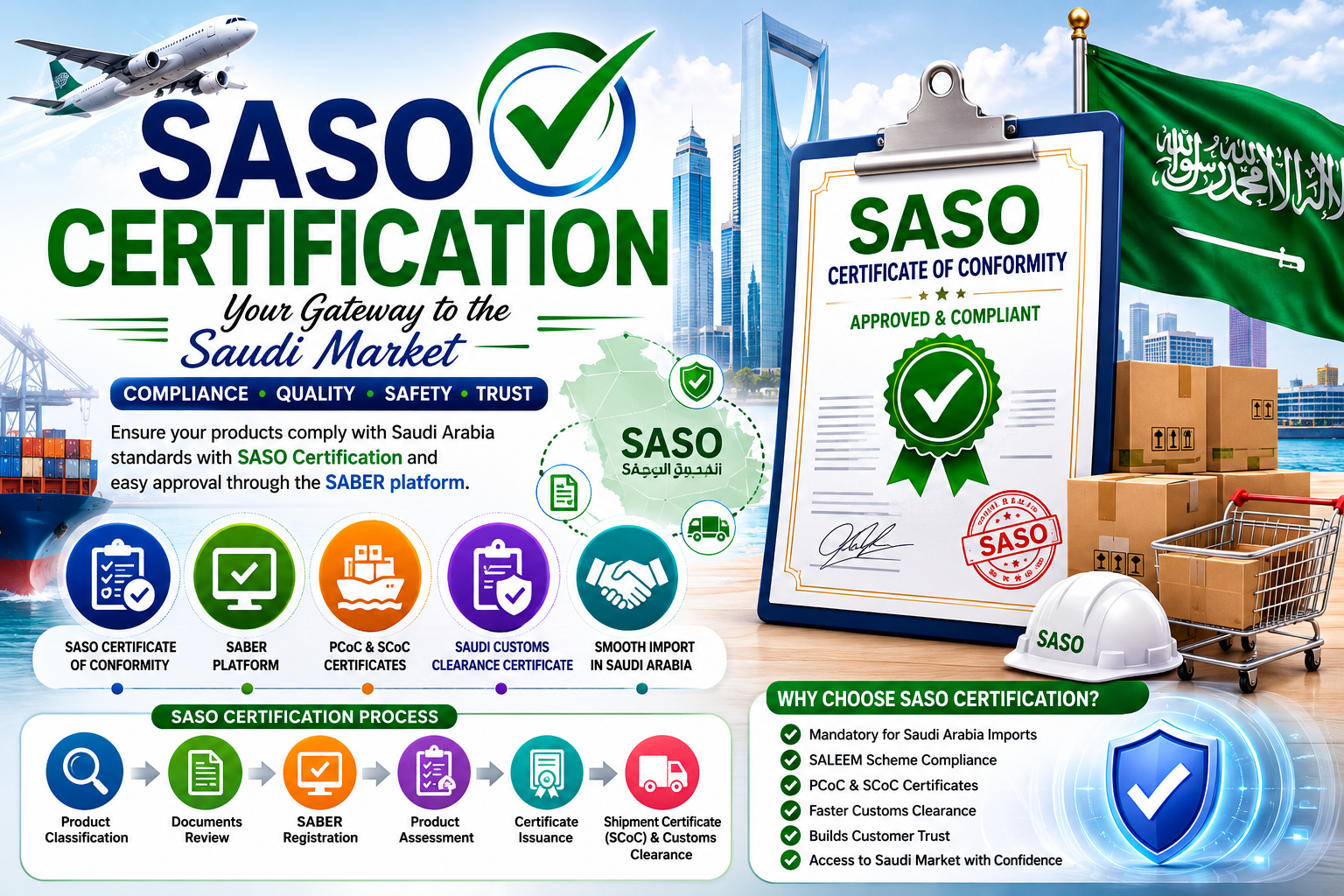
SASO Certification is a mandatory requirement for businesses exporting products to Saudi Arabia. The Saudi Standards, Metrology and Quality Organization (Saudi Standards, Metrology and Quality Organization), commonly known as SASO, regulates product standards to ensure imported goods meet safety, quality, and environmental requirements. Without proper certification, products may face delays, rejection, or penalties during customs clearance in Saudi Arabia.
SASO certification is essential for manufacturers, exporters, and importers who want to access the Saudi market smoothly. It ensures that products comply with Saudi technical regulations and standards before entering the country.
What is SASO Certification?
SASO Certification confirms that a product complies with Saudi Arabian standards and technical regulations. It demonstrates that products meet quality, safety, and performance requirements set by Saudi authorities. This certification helps protect consumers and ensures only compliant products enter the Saudi market.
Products such as electrical appliances, machinery, automotive parts, cosmetics, toys, construction materials, and many other regulated items require SASO certification before shipment.
The certification system has become more advanced with the implementation of the SALEEM Scheme, which simplifies product compliance verification and enhances product safety standards.
Understanding the SALEEM Scheme
The SALEEM Scheme is Saudi Arabia’s product safety program designed to ensure all imported and locally manufactured products comply with Saudi regulations. The term SALEEM means “safe,” reflecting the program’s goal of improving product safety and market quality.
Under the SALEEM Scheme, products are categorized based on risk levels and technical requirements. Manufacturers and importers must ensure their products meet applicable standards before they can be sold in Saudi Arabia.
This scheme works through the SABER platform, an online portal developed to streamline the certification process.
What is the SABER Platform?
The SABER platform, also called the SABER Portal, is an electronic system introduced by Saudi authorities to facilitate product registration and certification. It enables importers, manufacturers, and certification bodies to manage compliance requirements digitally.
Through SABER registration, businesses can register products, upload compliance documents, and apply for certificates required for import.
The SABER Portal simplifies the certification process by reducing paperwork and improving transparency in product approval procedures.
Key Certificates Under SASO Certification
Under the SASO system, two major certificates are required for regulated products:
Product Certificate of Conformity (PCoC)
The Product Certificate of Conformity (PCoC) verifies that a product complies with relevant Saudi technical regulations. This certificate is usually issued once product compliance has been successfully evaluated.
A Product Certificate of Conformity (PCoC) is essential before products can be listed on the SABER platform.
Shipment Certificate of Conformity (SCoC)
The Shipment Certificate of Conformity (SCoC) is required for every shipment entering Saudi Arabia. This certificate confirms that the shipped goods match the approved product certification.
The Shipment Certificate of Conformity (SCoC) plays a critical role in obtaining the Saudi customs clearance certificate.
SASO Certificate of Conformity
The SASO Certificate of Conformity serves as proof that products meet Saudi regulatory requirements. It is issued after successful product evaluation and compliance verification.
The SASO Certificate of Conformity helps businesses avoid customs issues and ensures faster product clearance in Saudi Arabia.
Companies exporting products without a valid certificate may face shipment delays, additional inspections, or rejection at customs.
SASO Certification Process
The SASO certification process involves several important steps:
1. Product Classification
Products are classified according to Saudi technical regulations and risk categories.
2. Document Review
Required documents such as test reports, technical files, product specifications, and quality certificates are reviewed.
3. SABER Registration
Products are registered through the SABER Portal for compliance verification.
4. Product Assessment
Certification bodies evaluate product compliance with Saudi standards.
5. Certificate Issuance
Once approved, the Product Certificate of Conformity (PCoC) is issued.
6. Shipment Approval
For each shipment, businesses apply for the Shipment Certificate of Conformity (SCoC).
7. Customs Clearance
Approved shipments receive the required Saudi customs clearance certificate for market entry.
Benefits of SASO Certification
Obtaining SASO Certification offers multiple advantages for businesses:
Smooth entry into the Saudi market
Faster customs clearance
Reduced shipment delays
Improved product credibility
Compliance with Saudi regulations
Better customer trust and market reputation
Certification also helps businesses minimize risks associated with non-compliance and product rejection.
Why SASO Certification is Important
Saudi Arabia maintains strict quality standards for imported products. Non-compliant products may face serious challenges during customs inspections. This is why SASO Certification is critical for exporters.
By following the SASO certification process, completing SABER registration, and obtaining required certificates through the SABER platform, businesses can ensure seamless product entry into Saudi Arabia.
Whether you are dealing with electrical products, machinery, consumer goods, or industrial equipment, compliance with the SALEEM Scheme and Saudi regulations is essential for long-term success in the Saudi market.
Businesses planning to export to Saudi Arabia should prioritize certification to avoid delays and ensure smooth trade operations.