
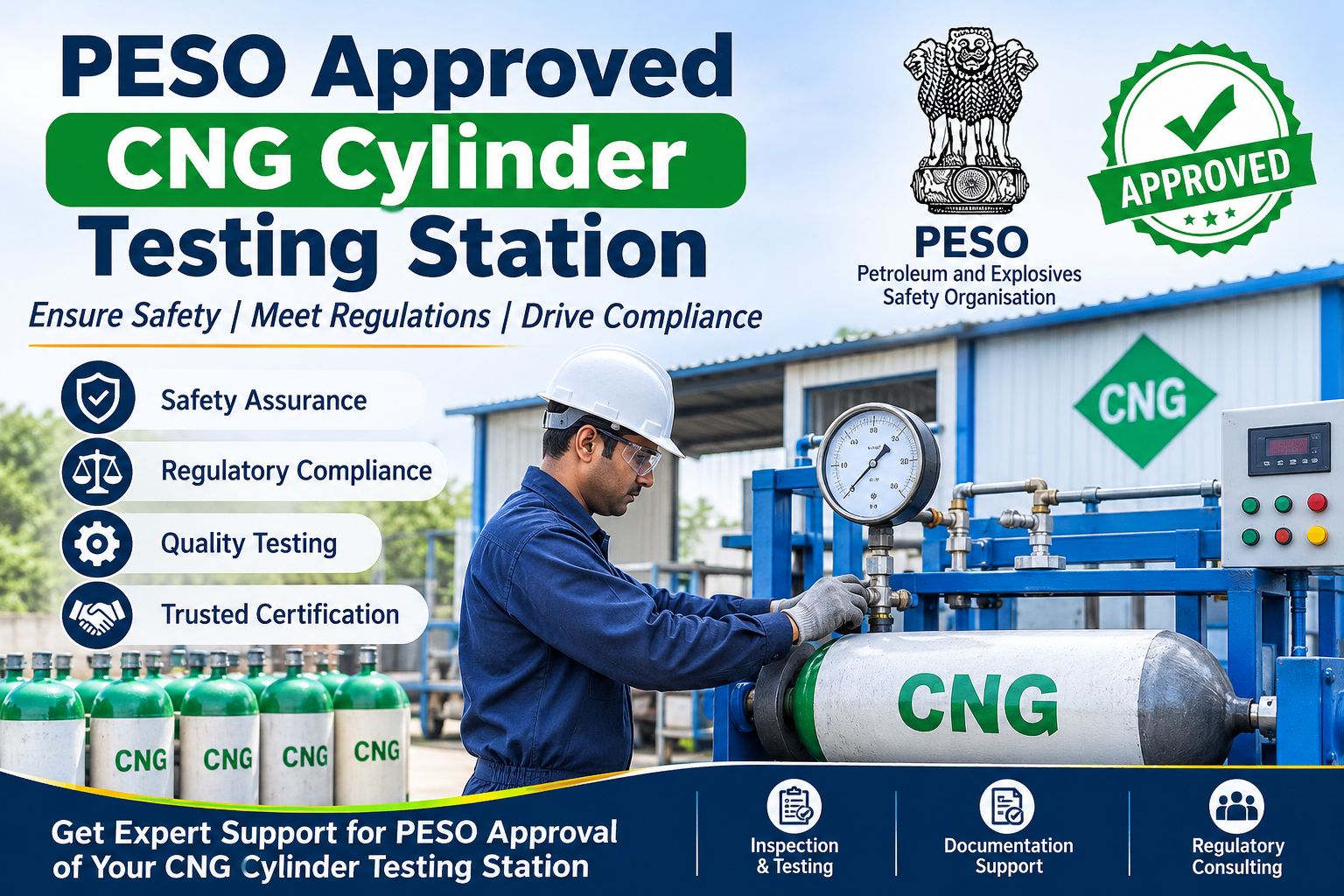
PESO Approved CNG Cylinder Testing Station in India
The demand for Compressed Natural Gas (CNG) vehicles and infrastructure is increasing rapidly in India due to the growing focus on cleaner fuels, reduced emissions, and sustainable transportation. CNG cylinders play an important role in storing and supplying compressed natural gas safely in vehicles, industrial applications, and other authorized installations. Since these cylinders operate under high pressure, regular inspection, testing, and safety verification are essential.
A PESO Approved CNG Cylinder Testing Station plays a significant role in ensuring that CNG cylinders meet applicable safety standards and regulatory requirements. The Petroleum and Explosives Safety Organisation (PESO), functioning under the Department for Promotion of Industry and Internal Trade (DPIIT), regulates various aspects of petroleum, explosives, gas cylinders, and pressure equipment safety in India.
Businesses planning to establish or operate a CNG cylinder testing facility must understand the applicable PESO regulations, technical requirements, testing procedures, and approval processes.
What Is a PESO Approved CNG Cylinder Testing Station?
A PESO Approved CNG Cylinder Testing Station is a testing facility authorized under applicable regulatory requirements to inspect and test gas cylinders in accordance with prescribed safety standards.
These stations help determine whether CNG cylinders are suitable for continued use, require maintenance, or must be rejected due to defects or damage.
The testing process generally involves checking the cylinder's physical condition, identifying corrosion or deformation, conducting prescribed pressure tests, and verifying relevant markings and identification details.
Testing facilities must have suitable infrastructure, qualified technical personnel, calibrated testing equipment, and documented quality-control procedures.
Importance of PESO Approval for CNG Cylinder Testing
PESO approval and applicable regulatory authorization are important for businesses involved in gas cylinder testing activities.
Some major benefits include:
Regulatory Compliance: Helps ensure that testing activities follow applicable Gas Cylinders Rules and PESO requirements.
Safety Assurance: Supports the identification of damaged, defective, or unsafe CNG cylinders.
Customer Confidence: Demonstrates a commitment to safety and established testing procedures.
Business Credibility: Helps testing stations establish their credibility among CNG suppliers, manufacturers, transport operators, and other customers.
Operational Reliability: Ensures that appropriate testing infrastructure and procedures are maintained.
Requirements for Establishing a CNG Cylinder Testing Station
Businesses planning to establish a CNG cylinder testing facility must meet the applicable regulatory and technical requirements.
Some important considerations include:
1. Infrastructure and Premises
The testing station should have suitable premises with adequate space for cylinder storage, inspection, testing, and handling. The facility layout should support safe movement of cylinders and personnel.
2. Testing Equipment
The facility must have appropriate testing equipment based on the scope of testing activities. This may include:
Hydrostatic testing equipment
Hydraulic pressure testing systems
Cylinder inspection equipment
Weighing machines
Measuring instruments
Calibration equipment
Safety and handling arrangements
3. Qualified Technical Personnel
The testing station should employ trained and competent personnel who understand cylinder inspection, testing procedures, safety precautions, and applicable technical standards.
4. Quality Management System
Proper documentation, testing records, equipment calibration records, inspection reports, and quality-control procedures should be maintained.
5. Safety Arrangements
Adequate safety measures must be implemented to protect employees, visitors, equipment, and the surrounding premises during testing operations.
CNG Cylinder Testing Procedures
CNG cylinder testing involves multiple inspection and testing activities depending on the cylinder type, applicable standard, and regulatory requirements.
Common activities include:
Visual Inspection: Checking the cylinder for corrosion, dents, cracks, bulging, and other visible damage.
Identification Verification: Examining cylinder markings, manufacturing details, serial numbers, and previous test information.
Hydrostatic Testing: Conducting the prescribed hydraulic pressure test to evaluate the cylinder's ability to withstand the required pressure.
Dimensional Inspection: Checking relevant dimensions and physical conditions.
Weight Verification: Evaluating cylinder weight where required under the applicable testing procedure.
Final Inspection: Reviewing test results and determining whether the cylinder meets the applicable acceptance criteria.
All testing activities must follow the relevant standards and approved procedures.
PESO Approval Process for CNG Cylinder Testing Stations
Obtaining the necessary PESO approval requires proper planning, technical preparation, and regulatory documentation.
The general process may involve:
Identifying the applicable regulatory provisions and approval requirements.
Preparing the testing station layout and infrastructure.
Arranging the required testing machinery and equipment.
Appointing qualified technical personnel.
Preparing technical documents and safety arrangements.
Submitting the applicable application and supporting documents to the concerned authority.
Undergoing inspection or assessment, wherever required.
Addressing observations raised by the regulatory authority.
Obtaining the applicable authorization before commencing regulated testing activities.
The exact approval procedure and documentation depend on the type of testing facility and applicable regulatory provisions.
Documents Required for PESO Approval
The documentation requirements may vary depending on the facility and scope of operations. Commonly required documents include:
Company registration documents
Premises ownership or lease documents
Site layout and building plans
Details of testing machinery and equipment
Equipment calibration certificates
Technical personnel qualifications
Safety arrangements and procedures
Quality-control documentation
Applicable application forms and declarations
Applicants should verify the latest documentation requirements before submitting their applications.
Why Choose a PESO Consultancy for CNG Cylinder Testing Station Approval?
Obtaining regulatory approval for a CNG cylinder testing station requires technical understanding and knowledge of applicable PESO regulations. Professional PESO consultants can help businesses navigate the approval process more efficiently.
A consultancy can assist with:
Regulatory requirement identification
Documentation preparation
Testing station infrastructure guidance
Technical compliance assessment
Application preparation and submission support
Coordination during regulatory inspections
Assistance in addressing compliance observations
Professional guidance can help minimize documentation errors and avoid unnecessary delays.
Conclusion
Establishing a PESO Approved CNG Cylinder Testing Station in India requires careful planning, suitable testing infrastructure, qualified personnel, and compliance with applicable regulatory requirements. Proper cylinder testing is essential for maintaining safety, reliability, and confidence in India's growing CNG ecosystem.
Businesses planning to establish a CNG cylinder testing facility should understand the applicable PESO regulations and complete the required approval formalities before starting operations.
Partnering with experienced PESO consultants can simplify the compliance journey and provide professional assistance throughout the approval process.
Representative Client's